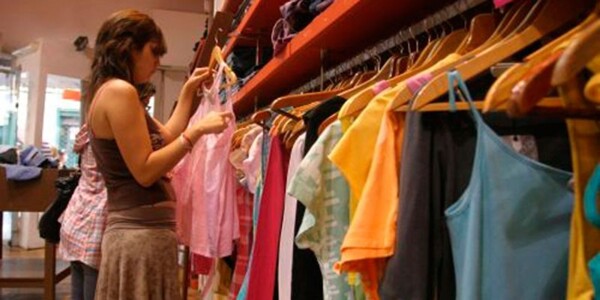
Private consumption in Argentina began 2026 with clear signs of fragility and stagnation, reflecting a scenario where families are making 'defensive' decisions to protect their wallets in the absence of an engine to drive economic development. According to information obtained by the Argentine News Agency (NA), the Business School of the University of Palermo (UP) presented its Private Consumption Index (ICP-UP), which registered a modest 0.1% monthly increase in seasonally adjusted terms in January, managing to halt the sequence of declines of the last semester. However, in the year-on-year comparison, the indicator marked a 1.5% drop, marking its second consecutive decline after the red numbers of December. In contrast, fuel sales showed a recovery of 3.8% towards the end of 2025. The gastronomic sector again showed fragility. 'The behavior of the index suggests that household spending continues to go through a phase of caution, with heterogeneous dynamics between sectors and without a clear engine for expansion,' warned Gabriel Foglia, dean of the UP Business School. How consumption is doing by sector The report presents a disparate panorama, where essential goods are undergoing adjustments and other sectors are achieving slight improvements: Durable goods: January marked a negative turning point for the automotive sector. Sales in toy, clothing, and footwear stores showed slight increases. Credit slowed down. At the macroeconomic level, general indicators are also sounding alarms that make it difficult to project a development scenario in the short term. Real VAT collection fell 3.1% year-on-year, accumulating its third consecutive decline. Likewise, although loans linked to consumption remain at positive rates, purchases with credit cards grew 11.7% year-on-year in January, showing a 'marked deceleration' compared to the 20% increases recorded at the end of 2025. The current scenario, marked by 'prudence', demonstrates that consumption is in a state of extreme fragility. To get back on the path of development and expansion, it will be necessary to reactivate economic dynamism, overcoming the stage in which households only make basic or defensive expenses. In contrast, motorcycle sales remained firm with a 15.3% year-on-year increase. Mass consumption: Adjustment decisions within households directly impacted tables: beef consumption plummeted 6.5% year-on-year, closing the semester in negative territory. The index of traditional restaurants in the City of Buenos Aires fell 2.3% year-on-year in December. Semi-durables: It was one of the few more stable sectors. Car registrations fell 4.2% year-on-year, interrupting a streak of 17 consecutive months of growth.